XXXXL Size Shirts: The Measurement Guide for 2026
XXXXL size on a shirt tag tells you which shelf it sits on. That's it. It doesn't tell you whether the shirt will close over your shoulders or sit right at the collar, and a shirt is the one plus-size garment where the chest number alone will not get you there, because neck and shoulder decide as much as chest does and the three don't grow at the same rate from brand to brand. Here's what XXXXL actually measures on a shirt, in inches, and how to check it against your own body before you order.
In short: a XXXXL (4XL) shirt is drafted for a 50–52 inch chest and an 18.5–19.5 inch neck in Indian menswear. The finished garment measures 56–58 inches, flat and doubled, once the cut's ease is added back in. Neck decides whether a formal shirt closes at the collar. Chest decides whether it is comfortable everywhere else. Buy for the neck first, then check the chest against your own tape measure; the letter on the tag will not tell you either one.
XXXXL size shirt measurements, in inches#
4XL and XXXXL are the same size written two ways, and for a shirt specifically the market convention looks like this:
| Point of measure | Your body (in) | 4XL shirt, garment flat (in) |
|---|---|---|
| Chest | 50–52 | 56–58 |
| Neck | 18.5–19.5 | 18.5–19.5 |
| Shoulder, seam to seam | 20–21 | 21–22 |
| Sleeve, shoulder to cuff | 25–26 | 25–26 |
| Waist | 44–46 | — |
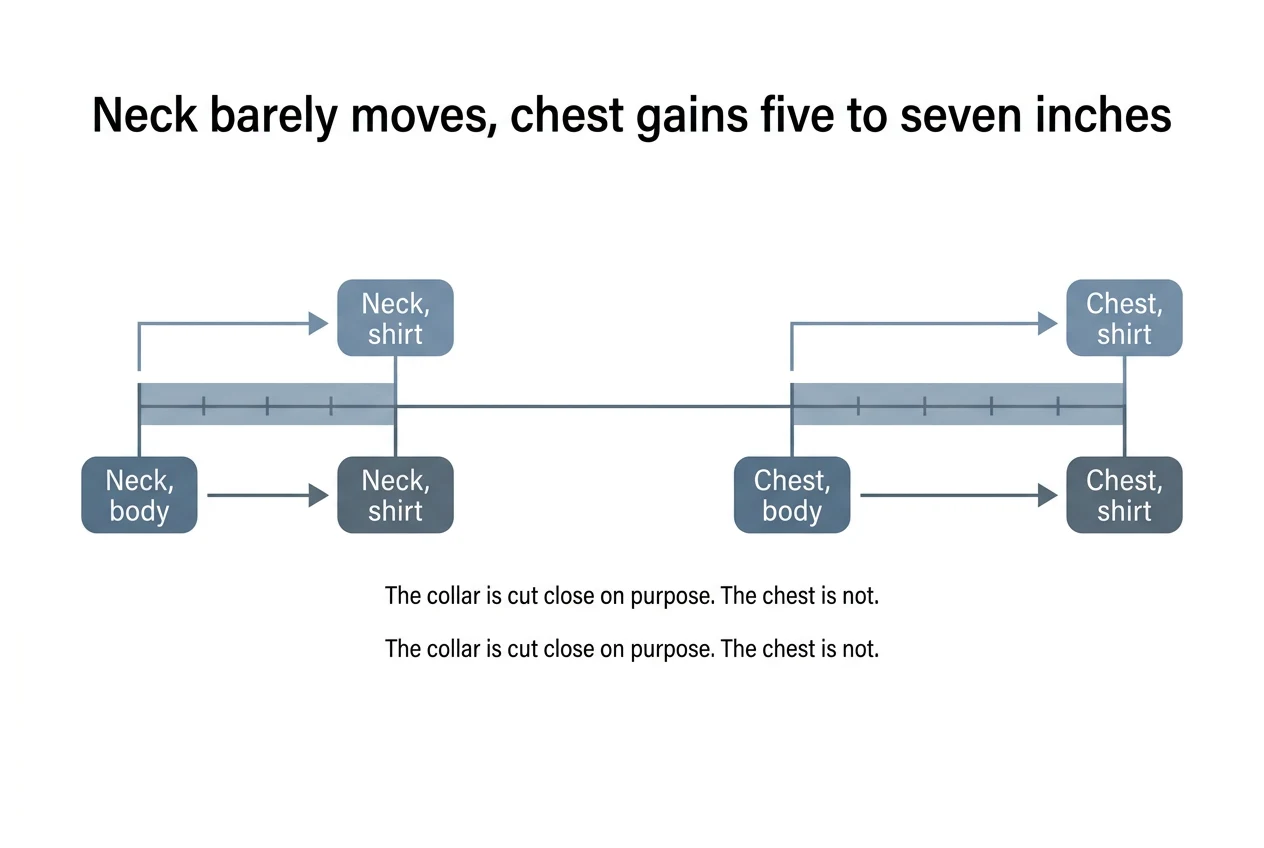
The left column is you. The right column is the shirt, measured flat with a tape, doubled at the chest. The gap between them is ease, the room a cut allows beyond your actual body. On a shirt that gap runs five to seven inches at the chest, wider than the four to six inches a t-shirt gets. A woven collar and a buttoned placket need room a knit fabric does not.
Neck barely moves between the body column and the garment column, and that is not a mistake in the table. A collar is cut close on purpose. It is also the measurement most listings leave off entirely. Write it down before you shop, not after a shirt arrives too tight at the throat.
None of this is any one brand's real chart. It is the convention across the market. A 4XL waist can be 44 inches at one store and closer to 48 at another, once you check what each one actually published. Where a brand does publish its own numbers, trust that over the table above.
Buy for the neck, then check the chest#
Formal shirts are the one category where the order of operations actually matters. Start at the neck. If the collar closes with a comfortable finger's width of room, the shirt was cut for someone close to your size, whatever the chest measures. If the neck fits but the chest pulls at the buttons, the shirt is not wrong for you. It is a shirt graded with a narrower body than the label assumes, and the fix is to size up rather than to blame the fit on yourself.
Casual and check shirts are more forgiving. Plenty of them are worn open or untucked, so a snug chest matters less than it does on something you button to the collar for work.
Fabric decides whether to size up or hold your XXXXL#
Woven cotton, the fabric of almost every formal and check shirt, has close to no stretch. Between two sizes, size up: a placket that pulls across the chest will pull all day, and standing straighter will not fix it.
Anything with elastane in the mix behaves differently. Around 2 percent elastane content covers roughly two inches of difference on its own. A shirt cut from that kind of fabric can hold your regular XXXXL even where a plain cotton one in the same size would not.
How to measure yourself for a shirt, in five minutes#
You need a soft tape measure and, ideally, a shirt you already own and like the fit of.
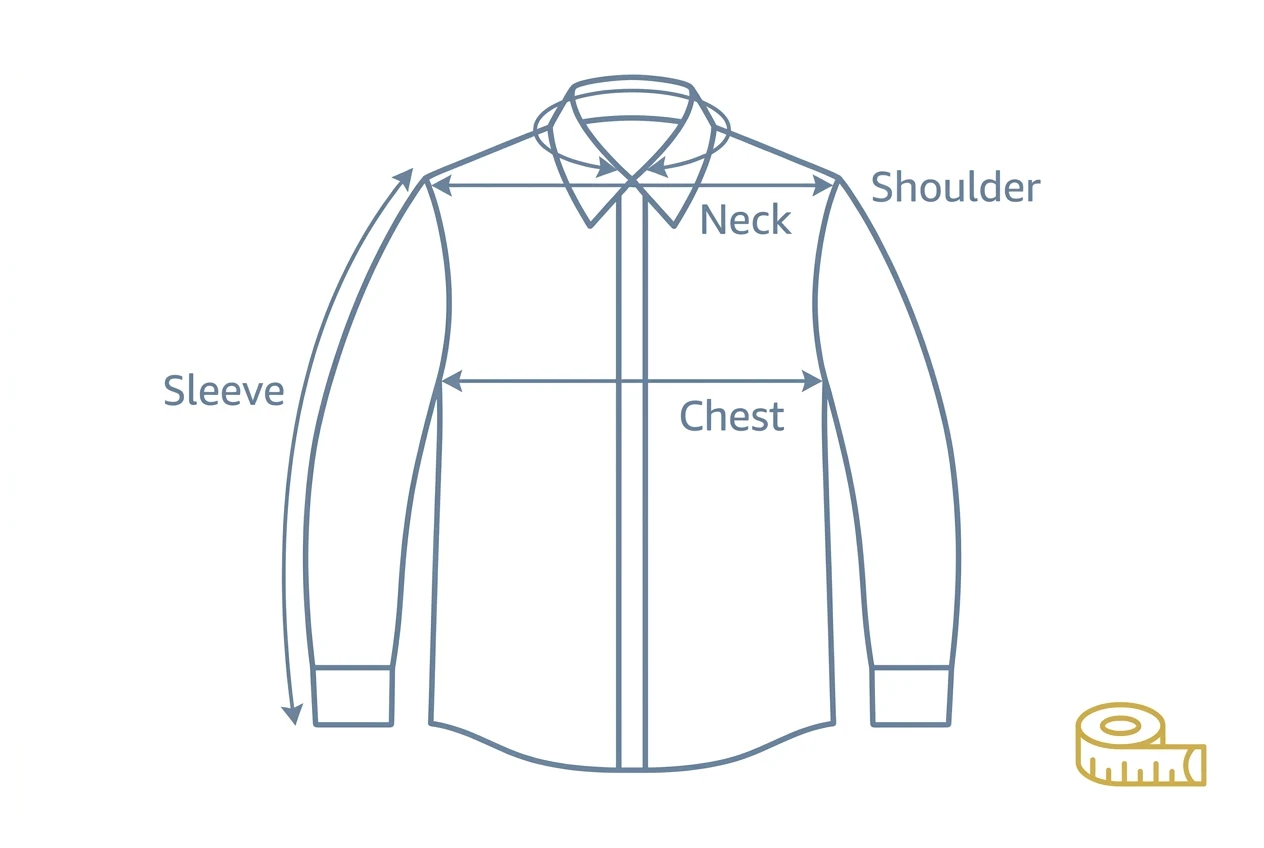
- Neck. Wrap the tape around the base of your neck, where a collar sits. Slide one finger underneath before you read the number. That finger's width is the room a comfortable collar needs.
- Chest. Tape around the fullest part of your chest, over a t-shirt. Keep it level front to back, and don't pull it tight. Read it the way it sits.
- Shoulder. Have someone measure seam to seam across your back, from the point of one shoulder to the other, or lay a well-fitting shirt flat and measure the same line on the fabric.
- Sleeve. From the shoulder point to your wrist bone, with your arm relaxed and very slightly bent.
If a store publishes garment measurements rather than body measurements, lay your own shirt flat and compare its numbers directly to theirs rather than trusting the size letter on either one. That single comparison catches more bad orders than any conversion chart does.
Questions people actually ask#
What is XXXXL size in a shirt? A XXXXL, or 4XL, shirt is cut for a 50–52 inch chest and an 18.5–19.5 inch neck in Indian menswear. The finished garment measures larger than that once ease is added, usually 56–58 inches at the chest, flat and doubled.
Is 4XL the same as XXXXL for shirts? Yes. Four X's and "4XL" are two ways of writing the same size; nothing about the measurement changes between them.
My neck and chest don't match the same size. What do I buy? Buy for the neck first on a formal shirt, since a tight collar is the one thing you cannot fix by choice of fabric. If the chest is then loose, that is a smaller problem than a collar that won't close.
I'm between 4XL and 5XL. Which one? Size up for a woven cotton shirt. It has almost no give, and a tight one only gets tighter through the day. Hold your regular size if the shirt has elastane in the fabric; roughly 2 percent content covers about two inches of difference on its own.
What if the store doesn't publish its own chart? Then the numbers on this page are the market convention, not that store's real cut. Compare against a shirt you already own before you order, especially at the chest and neck.
Read next#
- XXXXL size in inches — the full body-vs-garment breakdown for 4XL across every category, not just shirts.
- The measurement board — enter your own chest, waist and hip once and get a fit verdict against each brand's real chart.
- XXXXL shirts for men — today's in-stock shelf, updated from live inventory.