XL, XXL, XXXL, XXXXL - The Story of Sizes
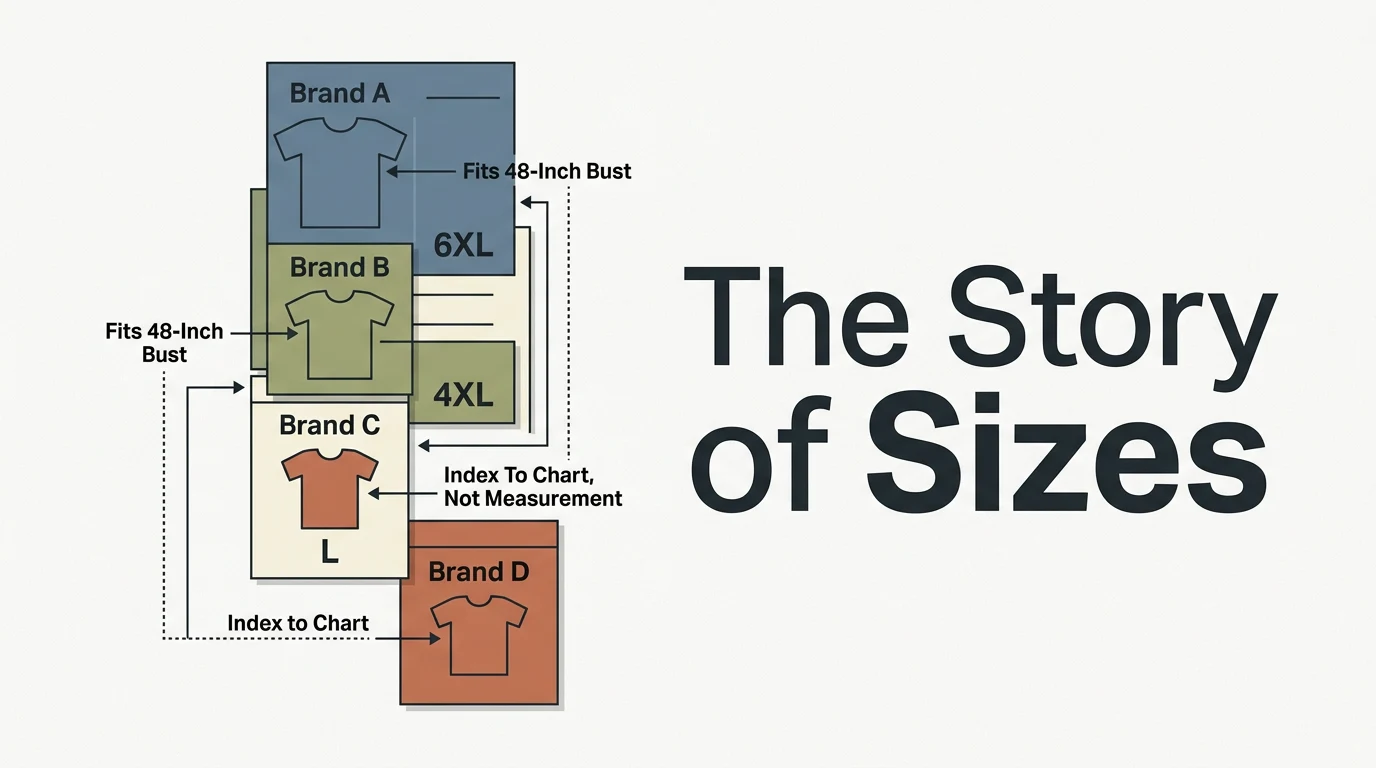
In short: Nobody is in charge of this. Sizes arrived when clothes were built at scale and that was for the army. So the measurements of many men were collected, sorted into a handful of workable combinations, and given names. Which is really just big, very big, very very big. Which became Small. Medium. Large. Extra large. Extra large became XL. Then XXL, then XXXL, and somewhere around there it stopped being sayable. Nobody wants to pronounce "extra extra extra extra large", so the X's started being counted instead of listed: 4XL, 5XL, 6XL. A number and a letter, meaning exactly what the stutter used to mean.
I am a 2XL. I have been a 2XL for years, in the way you stop thinking about after a while. You learn your size, you stop reading labels, you buy the thing and leave.
I bought a shirt in an XXL from one Indian brand and it fit. Weeks later I ordered an XXL shirt from a different Indian brand, and I could not do up the buttons. Not snug. Not a bit optimistic. It would not close.
My first thought was about me. It always is. I stood there wondering, briefly and stupidly, what had changed.
Nothing had. Both shirts were made in India. Both said XXL on the label. One of those brands cuts its XXL shirt for a 46-inch chest and the other for 54. Eight inches, on the same two letters, in the same country.
When I mentioned it to friends, half expecting to be laughed at, every one of them had a version of the story. A kurta that arrived built for someone else. A pair of jeans that fit in one shop and not in the next, on the same street, the same afternoon.
Here is the part that stayed with me. My instinct was that my body had changed. It had not. A label had. And a label is not a measurement of you, it is a row in a chart you have never seen.
So I went looking for who decides what a 2XL is. The answer is nobody, and the story of how that happened is genuinely strange.
That is what a size is. It is an index: a pointer into one brand's chart. It is not a description of you.
Here are five garments stepping up one rung at a time, as the US and the UK label them:
| US label | 6 | 8 | 10 | 12 | 14 |
|---|---|---|---|---|---|
| UK label | 10 | 12 | 14 | 16 | 18 |
Same five garments. Every number different, by exactly four. A UK 12 and a US 12 are two sizes apart, which is a whole rung and a half of real fabric.
Nobody is in charge of this#
Nobody is in charge of this.
Sizes arrived when clothes were built at scale, and that was for the army. The measurements of many men were collected, sorted into a handful of workable combinations, and given names.
Which is really just big, very big, very very big.
Which became Small. Medium. Large. Extra large.
Extra large became XL. Then XXL, then XXXL, and somewhere around there it stopped being sayable. Nobody wants to pronounce "extra extra extra extra large", so the X's started being counted instead of listed: 4XL, 5XL, 6XL.
A number and a letter, meaning exactly what the stutter used to mean.
Small is only small next to something smaller#
Call a garment small and you have said nothing absolute. It is small compared to the one beside it. Put it next to something smaller and it is the big one now.
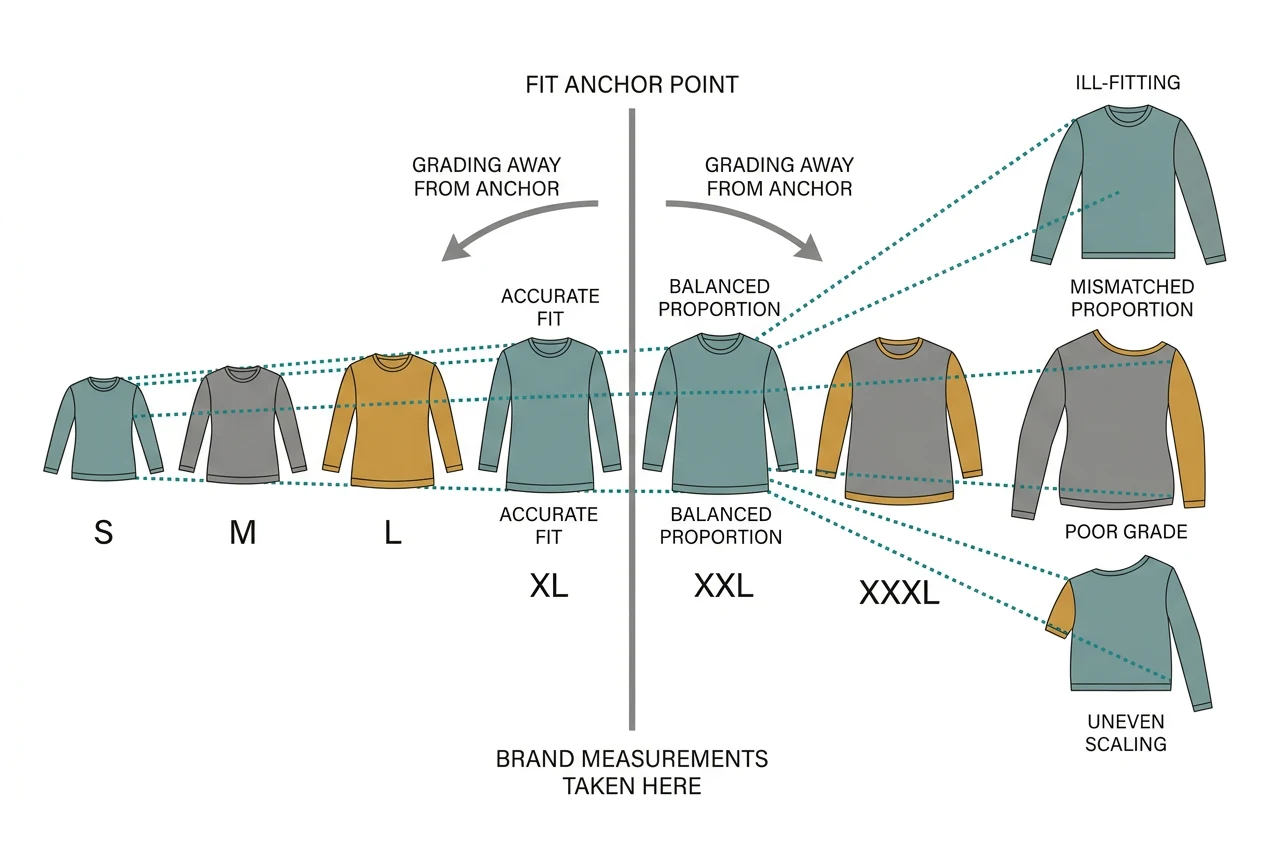
So how does a brand decide where the line falls? It picks a set of measurements (chest, waist, height, shoulder, sleeve) and declares that combination to be M. Then it grades outward, stepping each dimension up and down in more or less even increments to make S, L, XL and the rest. The whole run is generated from one anchor.
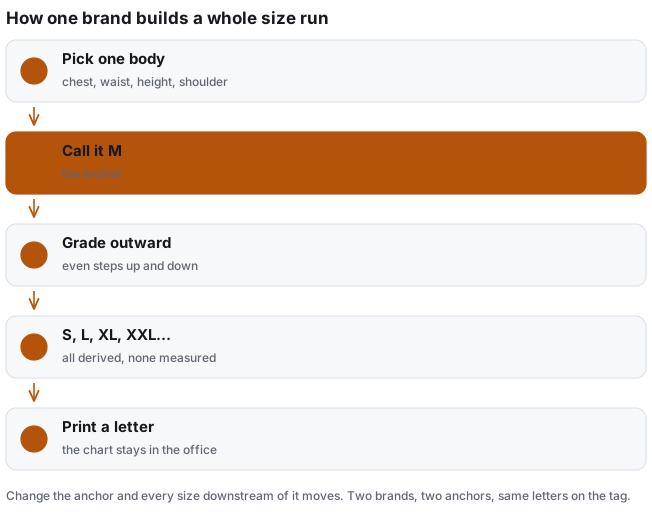
Which means two brands that pick different anchors produce different clothes under the same letter. Nobody is doing anything wrong. There is just no shared definition of M to be wrong about.
Where the letters came from#
Before the 1800s the question did not arise. Clothes were made for one body: cut and stitched to the person who was going to wear them. There were no sizes because there was nothing to categorise.
Sizes arrived with the need to clothe a lot of people at once, and the first customer at that scale was the army. Uniforms had to be made in bulk, before anyone knew whose body each one would end up on. So the measurements of many men were collected, sorted into a handful of workable combinations, and given names. Small. Medium. Large. Extra large.
Which is really just big, very big, very very big.
The point where the letters ran out#
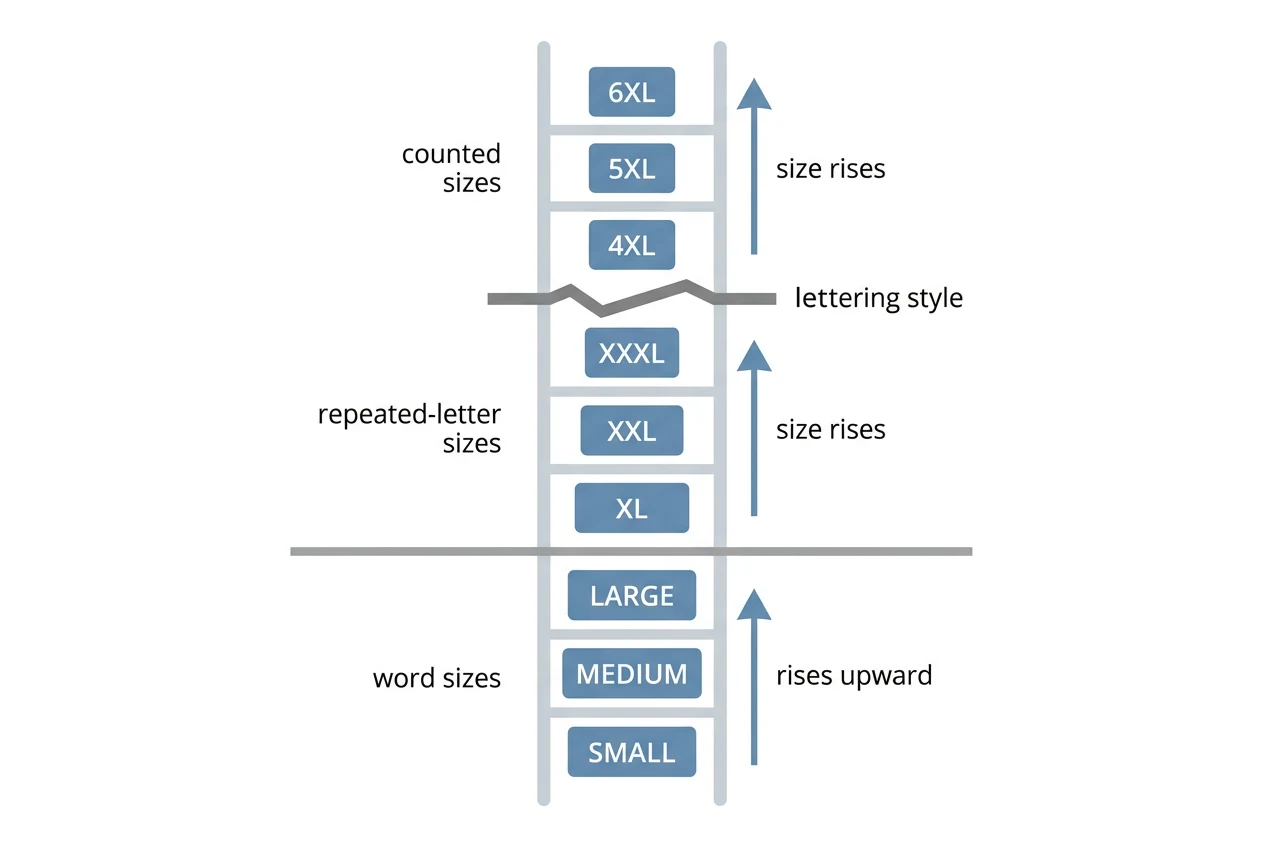
Extra large became XL. Then XXL, then XXXL, and somewhere around there it stopped being sayable. Nobody wants to pronounce "extra extra extra extra large", so the X's started being counted instead of listed: 4XL, 5XL, 6XL. A number and a letter, meaning exactly what the stutter used to mean.
XXL and 2XL are the same rung nearly everywhere. The exception is a manufacturer who has decided, inside their own catalogue, that the two are different sizes. It happens, and when it does the chart is the only way to know. The numbers underneath the letters are a separate convention again, and they step by two inches.
So the ladder is really three naming systems stacked on top of each other. Words up to large. Letters through the middle. Counted X's at the top, where the words gave up.
No Global Authority#
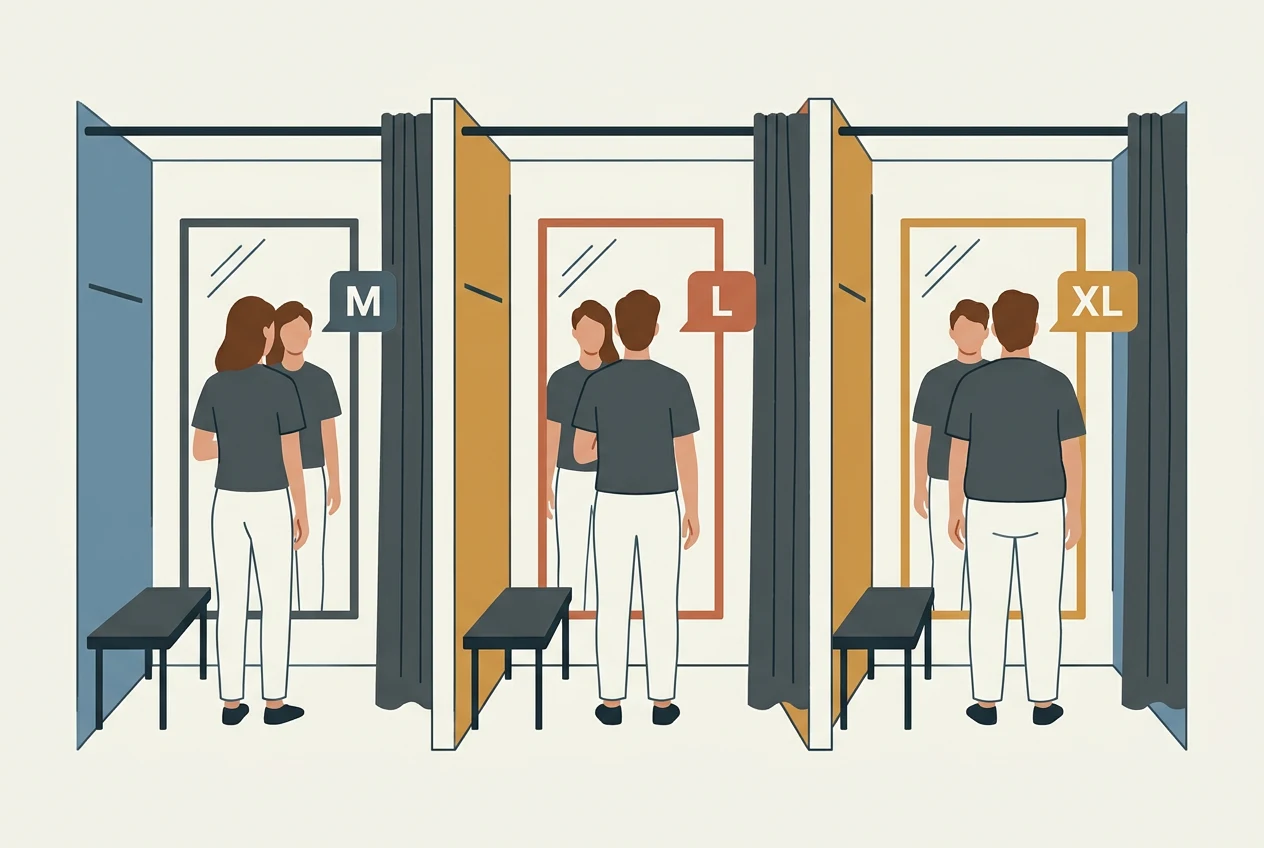
There is no global authority that defines M. Countries have their own standards, brands adopt one and adjust it by feel, and the same body walks out of one shop a medium and another a large.
India is a particular case, because there has been no native chart at all. Brands here borrow the US, UK or EU systems and grade against a population those charts were never drawn for. That is now changing. NIFT spent six years scanning Indian bodies and published a size chart in 2023, and what they found is worth its own page.
Why the top of the range gets it worst#
Every point above is sharper at the top of the size run. A brand anchors its chart around the middle of its range and grades outward, so the furthest sizes sit furthest from anything anyone actually measured. Depth through the body, front rise and armhole are what a linear grade gets wrong, and they are exactly what stops a 6XL from fitting a 6XL body.
If you wear a medium, a bad grade costs you a slightly odd fit. If you wear a 6XL, it costs you the garment.
The same body, three womenswear brands#
This is not theoretical. Here are three Indian womenswear brands that publish a chart of body measurements (what you should measure, not what the garment measures) read from their own size-chart pages in August 2026.
| Your bust measures | Amydus | Bunaai | Tijori |
|---|---|---|---|
| 44" | 4XL | XXL | XXL |
| 46" | 5XL | 3XL | XXXL |
| 48" | 6XL | 4XL | range ends |
| 50" | 7XL | 5XL | range ends |
| 54" | 9XL | range ends | range ends |
Bunaai and Tijori agree with each other exactly, rung for rung. Amydus is consistently two sizes off from both of them: not randomly, not by a rounding error, but by the same two rungs the whole way up the run.
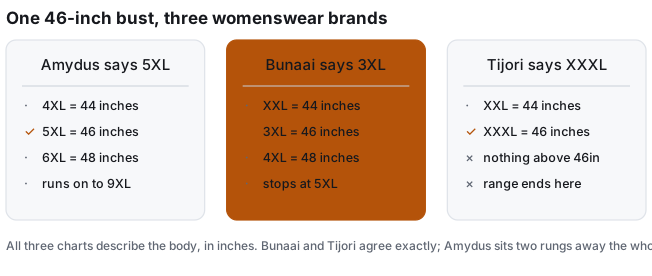
So a 48-inch bust is a 6XL at Amydus and a 4XL at Bunaai. Order a 6XL from Bunaai because Amydus taught you that you are a 6XL, and you will receive something two sizes too big. Order a 4XL from Amydus for the same reason and it will not go on.
Most people conclude they have misjudged their own body rather than that the brands disagree. That is the part worth being angry about. The label moved, not you.
And Tijori simply stops. At 48 inches there is no size to order, which is the other half of the problem nobody puts on a chart.
Menswear is worse, because almost nobody measures you#
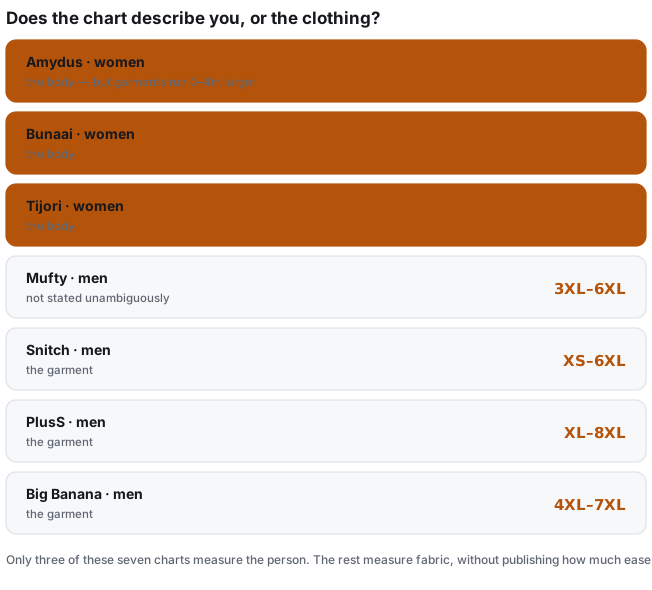
The womenswear charts above describe your body. Most menswear charts describe the shirt. Here is what four brands mean by 4XL:
| Brand | 4XL chest | What that number measures |
|---|---|---|
| Mufty | 50" | stated ambiguously: the chart says "to-fit" but also lists a garment waist |
| Snitch | 54" | the garment |
| Big Banana | 55.2" | the garment |
| PlusS | 58" | the garment |
Eight inches of spread on one label.
What this means in practice#
There is no reading of a letter that survives contact with these charts, not across brands, and not within one. The only thing that transfers between brands is inches.
Measure yourself once and write the numbers down. Then, on every product page, check whether the chart describes your body or the garment, and read against that rather than against the letter you think you are.
If you want the numbers rather than the letters, XXXXL in inches has the point-of-measure tables, the size guide covers what each label usually means, and where each store stops has the size ceilings.
Source#
Brand charts were read from each brand's own published size-chart page in August 2026 and are reproduced above as published. Where a brand's chart does not state whether a figure describes the body or the garment, that is noted rather than assumed. The US and UK label equivalence is from INDIAsize: National Sizing Survey of India, National Institute of Fashion Technology, 2023, Table 13. The history of ready-to-wear sizing here is the broad outline (the 1800s and the military origin), not a dated account.